
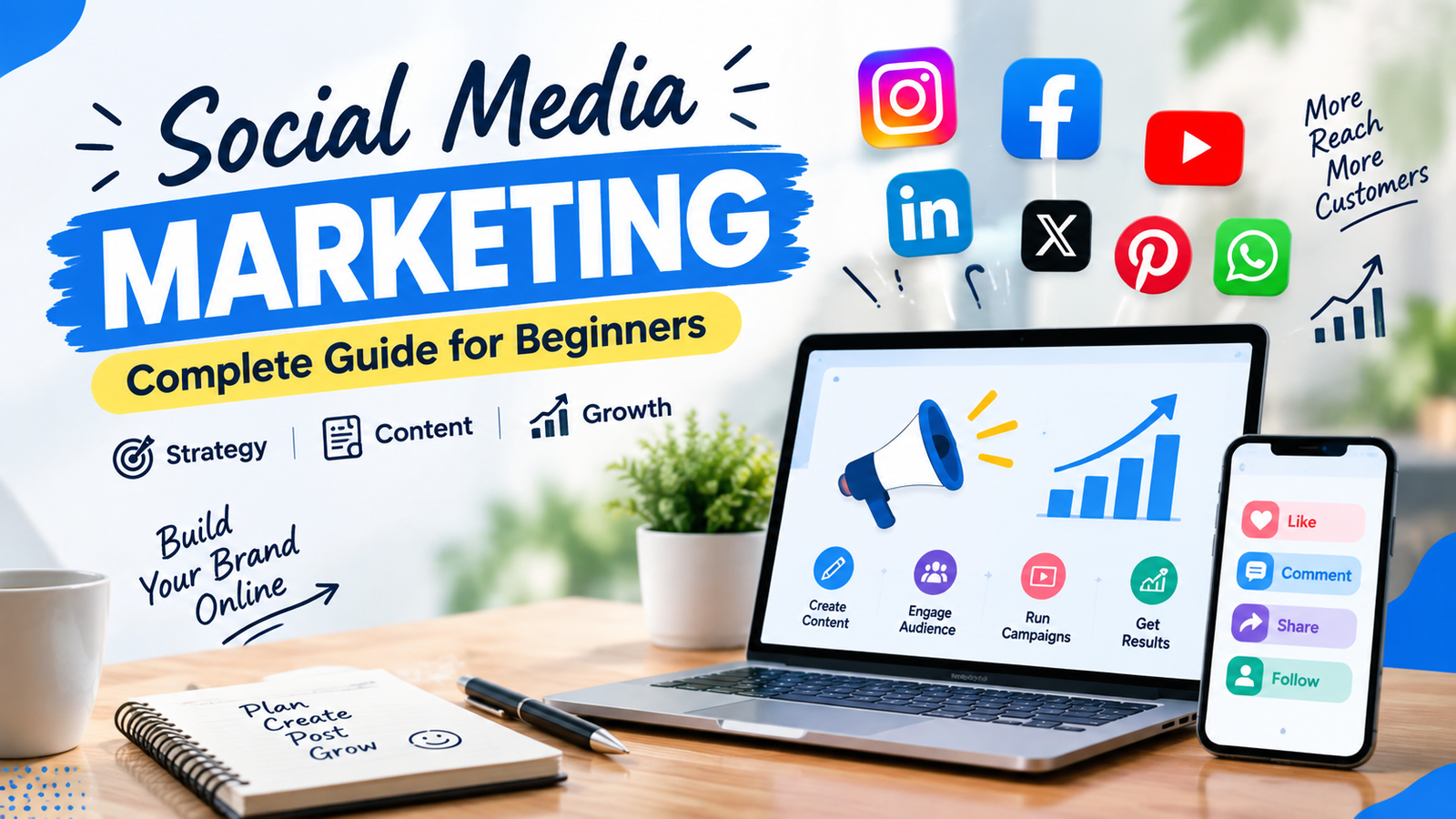
Social media has become one of the most powerful ways for businesses, creators, professionals, and brands to connect with people online. Whether you are running a small business or building your personal brand, social media marketing can help you reach the right audience and build a strong online presence.
But what exactly is social media marketing, and how does it work?
In this beginner-friendly guide, we will understand social media marketing, its benefits, popular platforms, important strategies, and how you can get started.
What Is Social Media Marketing?
Social Media Marketing (SMM) is the process of promoting a business, product, service, website, or personal brand through social media platforms.
It involves creating and sharing useful content, interacting with followers, building a community, increasing brand awareness, and sometimes using paid advertisements to reach a larger audience.
Popular social media platforms include:
- YouTube
- X
Each platform has its own audience and content style, so businesses should choose platforms according to their goals and target audience.
Why Is Social Media Marketing Important?
Today, people spend a significant amount of time on social media. This gives businesses an opportunity to communicate directly with potential customers.
Some important benefits include:
1. Builds Brand Awareness
Regular and useful content can help more people discover your brand and remember your business.
2. Reaches Your Target Audience
Social media allows you to create content for specific audiences based on factors such as interests, location, age, and online behavior.
3. Increases Website Traffic
You can use social media posts, videos, stories, and advertisements to send visitors to your website or blog.
4. Builds Customer Relationships
Social media is not only about promotion. Replying to comments and messages helps businesses communicate with their customers and build relationships.
5. Supports Business Growth
A consistent social media strategy can help businesses generate enquiries, leads, sales, and long-term customers.
How Does Social Media Marketing Work?
A successful social media marketing strategy usually involves several steps.
Step 1: Define Your Goal
First, decide what you want to achieve.
For example:
- Increase brand awareness
- Get more website visitors
- Generate leads
- Increase sales
- Build a personal brand
- Grow an online community
Step 2: Understand Your Audience
Know who you want to reach.
Think about:
- Who are your customers?
- What problems do they have?
- What type of content do they like?
- Which social media platforms do they use?
Understanding your audience helps you create more relevant content.
Step 3: Choose the Right Platforms
You do not necessarily need to use every social media platform.
For example, Instagram can be useful for visual content and personal brands, while LinkedIn can be useful for professional networking and business-related content.
Choose platforms according to your audience and goals.
Step 4: Create Valuable Content
Content is one of the most important parts of social media marketing.
You can create:
- Educational posts
- Short videos
- Reels
- Infographics
- Tips and tricks
- Behind-the-scenes content
- Customer stories
- Product demonstrations
- Industry updates
The goal should be to provide value rather than simply posting advertisements repeatedly.
Step 5: Post Consistently
Consistency helps you stay visible to your audience.
Instead of posting randomly, create a simple content calendar and plan your posts in advance.
Step 6: Engage With Your Audience
Social media is a two-way communication channel.
Reply to comments, answer questions, respond to messages, and encourage meaningful conversations with your audience.
Step 7: Track Your Results
Use analytics to understand what is working.
Important metrics include:
- Reach
- Impressions
- Engagement
- Likes
- Comments
- Shares
- Followers
- Website clicks
- Leads
- Conversions
These insights can help you improve your future content.
Organic vs Paid Social Media Marketing
Social media marketing can generally be divided into two approaches.
Organic Social Media Marketing
Organic marketing means growing your audience without directly paying for advertising.
Examples include:
- Regular posts
- Reels
- Stories
- Educational content
- Community engagement
Paid Social Media Marketing
Paid marketing involves using advertising tools offered by social media platforms to reach selected audiences.
Paid campaigns can be used for goals such as:
- Website traffic
- Lead generation
- Product promotion
- App promotion
- Brand awareness
Both organic and paid strategies can be part of a broader digital marketing plan.
Common Social Media Marketing Mistakes
Beginners often make some simple mistakes.
Posting Without a Strategy
Posting content without knowing the goal can make your social media presence inconsistent.
Focusing Only on Promotion
People generally do not want every post to be a sales advertisement. Educational, entertaining, and useful content can make your page more valuable.
Ignoring Comments and Messages
If people take the time to interact with your content, responding to them can help build stronger relationships.
Using the Same Content Everywhere
Different platforms have different audiences and formats. Content should be adapted to each platform when possible.
Not Checking Analytics
Without measuring performance, it becomes difficult to understand which content is helping you achieve your goals.
Tips for Successful Social Media Marketing
Here are some practical tips for beginners:
- Know your target audience.
- Create useful and original content.
- Maintain a consistent posting schedule.
- Use attractive visuals and short-form videos.
- Encourage interaction.
- Study your analytics regularly.
- Keep learning about new platform features.
- Test different types of content.
- Focus on building trust.
- Be patient and consistent.
- Read Now
AI Digital Marketing Trends 2026: Tools, SEO & Future
Final Thoughts
Social media marketing is more than simply posting pictures or videos. It is a complete strategy for building an online presence, communicating with an audience, promoting a brand, and supporting business growth.
If you are a beginner, start with one or two platforms, understand your audience, create useful content, and consistently measure your results.
With the right strategy and patience, social media can become an important part of your digital marketing journey.
Leave a Reply