
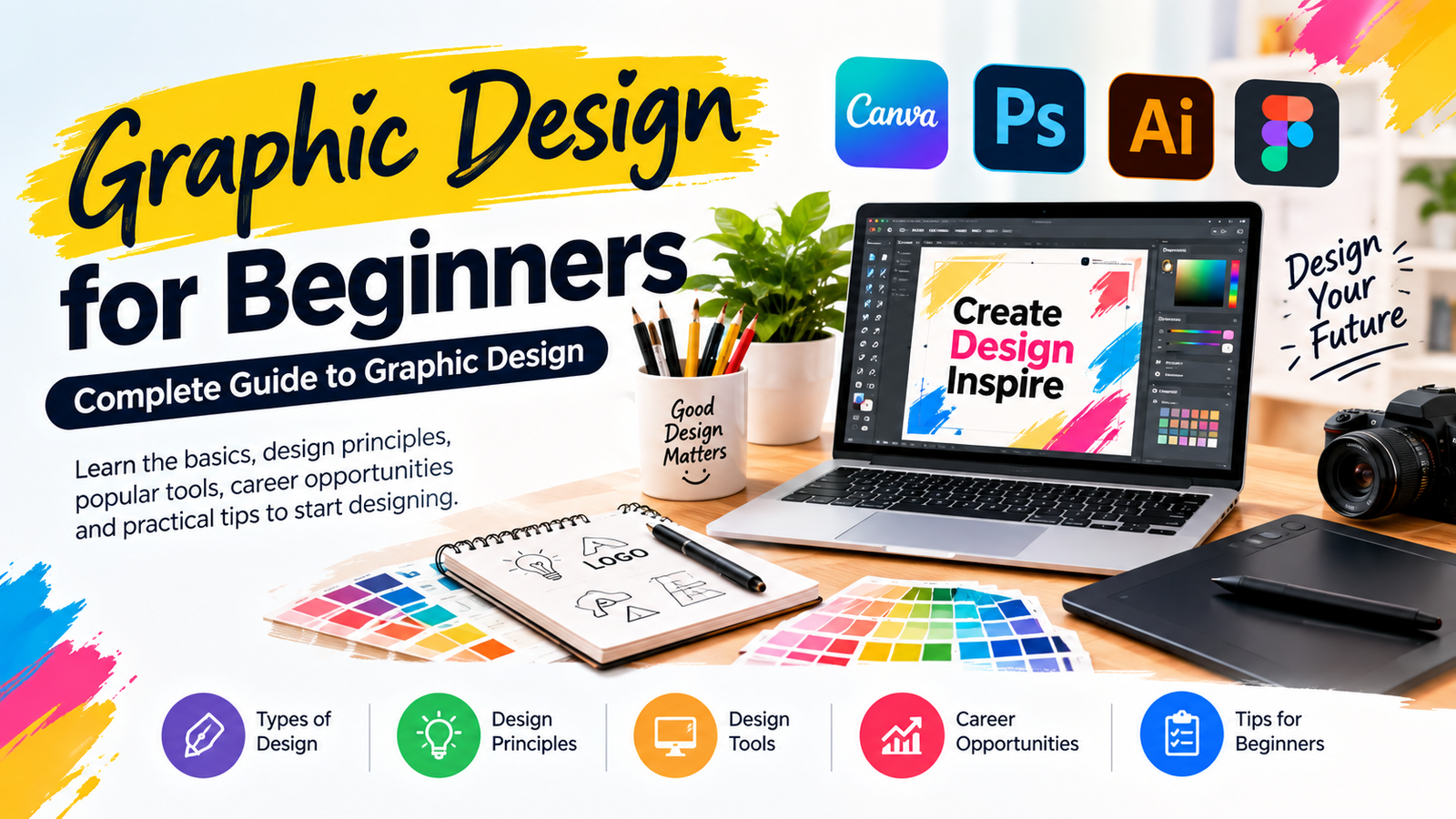
Graphic Design for Beginners is a great way to start learning how visual content is created and used to communicate ideas. Graphic design is everywhere around us, from logos and posters to social media posts, websites, advertisements, thumbnails, and product packaging.
With the growth of social media, websites, and online businesses, graphic design has become an important digital skill. You do not need to be an expert to start learning graphic design. With creativity, practice, and the right tools, beginners can gradually develop useful design skills.
In this complete guide, we will understand what graphic design is, its different types, important design principles, popular graphic design tools, career opportunities, and practical tips for beginners.
What Is Graphic Design?
Graphic design is the process of combining text, images, colors, shapes, fonts, and other visual elements to communicate a message or idea.
A graphic designer creates visual content that is attractive, easy to understand, and suitable for a particular audience.
For example, when a business needs a logo, promotional poster, social media post, banner, advertisement, or business card, graphic design can be used to create it.
Graphic design is not only about making something look beautiful. A good design should also communicate the right message clearly.
Why Is Graphic Design Important?
Graphic design plays an important role in modern businesses and digital communication. A professional design can help a business present its products and services more effectively.
Here are some important benefits of graphic design:
1. Creates a Strong First Impression
People often notice the visual appearance of a brand before reading all the information. A clean and professional design can help create a strong first impression.
2. Builds Brand Identity
Logos, colors, fonts, images, and visual styles help people recognize a business or personal brand.
3. Makes Information Easier to Understand
A well-designed graphic can present information in a simple and visually understandable way.
4. Helps With Social Media Marketing
Businesses and creators use graphic designs for Instagram posts, Facebook posts, advertisements, stories, thumbnails, and other social media content.
5. Supports Business Promotion
Posters, banners, brochures, advertisements, and promotional graphics can help businesses communicate their products and services to potential customers.
Different Types of Graphic Design
Graphic design is a broad field with many different areas. Beginners can explore different types of design and choose an area that matches their interests.
Logo Design
Logo design is the process of creating a visual symbol that represents a business, organization, product, or personal brand.
A good logo should be simple, recognizable, memorable, and suitable for the brand.
Social Media Design
Social media design includes posts, stories, advertisements, covers, banners, and other visual content created for social media platforms.
Businesses use social media designs to promote products, share information, communicate with customers, and build their online presence.
Poster Design
Posters are commonly used to promote events, products, services, offers, campaigns, and announcements.
A good poster should have a clear message, attractive visuals, readable text, and a suitable layout.
Banner Design
Banners are used on websites, social media platforms, advertisements, and promotional campaigns.
Website banners and advertising banners need to communicate their message quickly because users may only look at them for a few seconds.
Thumbnail Design
Thumbnails are visual images used for videos, blogs, and other digital content.
An attractive thumbnail can help communicate the topic of the content and encourage people to learn more.
Branding Design
Branding design involves creating a consistent visual identity for a business or personal brand.
It can include logos, colors, typography, business cards, packaging, social media designs, and other visual materials.
Important Principles of Graphic Design
Learning design principles is an important part of Graphic Design for Beginners. These principles help designers create balanced, readable, and professional-looking designs.
Balance
Balance means arranging visual elements so that the design does not feel too heavy on one side.
A balanced design usually feels organized and comfortable to view.
Contrast
Contrast helps important elements stand out. It can be created using differences in colors, sizes, shapes, fonts, or other visual elements.
Alignment
Proper alignment makes a design look organized and professional.
Text, images, icons, and other elements should be positioned carefully instead of being placed randomly.
Visual Hierarchy
Visual hierarchy helps viewers understand which information they should notice first, second, and third.
For example, a poster title can be larger than the supporting information so that the viewer notices the main message first.
White Space
White space is the empty area around design elements.
Using enough white space can make a design easier to read and prevent it from looking crowded.
Consistency
Consistency means using related fonts, colors, spacing, and visual styles throughout a design or brand.
Consistency can make a design look more professional.
Popular Graphic Design Tools
There are many tools available for people who want to learn graphic design.
Canva
Canva is a beginner-friendly online design platform. It provides templates and tools for creating social media posts, presentations, posters, thumbnails, banners, and many other types of designs.
It can be a useful starting point for people who are new to graphic design.
Adobe Photoshop
Adobe Photoshop is widely used for image editing, photo manipulation, digital graphics, and many professional design tasks.
Adobe Illustrator
Adobe Illustrator is commonly used for vector graphics, logos, illustrations, icons, and other scalable designs.
Figma
Figma is commonly used for interface design, website design, app design, and collaborative design projects.
The best tool depends on the type of design you want to create and your level of experience.
How to Start Graphic Design for Beginners
If you are completely new to graphic design, you can follow a simple learning process.
Step 1: Learn the Basics
Start by understanding basic concepts such as:
- Color theory
- Typography
- Layout
- Alignment
- Contrast
- Composition
- White space
- Visual hierarchy
Understanding these concepts can help you make better design decisions.
Step 2: Choose One Design Tool
Do not try to learn every design software at the same time.
Choose one tool and learn its basic features first. Once you become comfortable with it, you can explore other tools.
Step 3: Practice Regularly
Practice is one of the most important parts of learning graphic design.
Try creating simple projects such as:
- Social media posts
- Posters
- YouTube thumbnails
- Business cards
- Simple logos
- Promotional banners
- Website graphics
Step 4: Study Professional Designs
Look at professional designs and try to understand why they look effective.
Pay attention to:
- Font selection
- Color combinations
- Spacing
- Image placement
- Layout
- Visual hierarchy
Studying good designs can help improve your understanding of design.
Step 5: Create Your Own Projects
Do not only watch tutorials. Create your own designs.
For example, choose an imaginary business and create a logo, poster, social media post, and business card for it.
This will help you develop practical skills.
Step 6: Build a Portfolio
Save your best designs and create a portfolio.
A portfolio can help demonstrate your skills to potential clients, businesses, employers, or anyone interested in your work.
Can Graphic Design Become a Career?
Yes, graphic design can be developed into a professional skill or career.
People with graphic design skills can work in areas such as:
- Logo design
- Social media design
- Branding
- Advertising
- Web design
- Content creation
- Freelancing
- Digital marketing
- Print design
- Thumbnail design
Some designers work for companies and agencies, while others work independently with clients.
Graphic Design and Digital Marketing
Graphic design and digital marketing are closely connected.
Digital marketers often need visual content for social media campaigns, advertisements, websites, blogs, email campaigns, and promotional activities.
For example, a digital marketing campaign may require social media posts, advertisements, banners, thumbnails, and other graphics.
Learning both graphic design and digital marketing can therefore be useful for people who want to work in the online industry.
Common Graphic Design Mistakes
Beginners can improve their designs by avoiding some common mistakes.
Using Too Many Fonts
Using too many different fonts can make a design confusing.
Try to use a limited number of fonts that work well together.
Using Too Many Colors
Too many colors can reduce visual consistency.
Choose colors carefully and make sure they match the purpose and identity of the design.
Adding Too Much Information
A design should communicate its main message clearly.
Avoid filling every available space with text, images, and graphics.
Ignoring Readability
A beautiful design is not useful if people cannot read its information.
Make sure the text is large enough and has sufficient contrast with the background.
Ignoring Spacing
Proper spacing between text, images, and other elements can make a design look cleaner and more professional.
Copying Other Designers
It is useful to study professional designs, but your final work should develop its own creative direction.
Tips for Better Graphic Design
Here are some useful tips for Graphic Design for Beginners:
- Keep your designs simple.
- Use readable fonts.
- Maintain proper spacing.
- Choose colors carefully.
- Use high-quality images.
- Create a clear visual hierarchy.
- Keep your design consistent.
- Understand your target audience.
- Practice regularly.
- Keep learning new design techniques.
- Experiment with different layouts.
- Review your designs before publishing them.
How Long Does It Take to Learn Graphic Design?
The time required to learn graphic design depends on your practice, learning method, and goals.
A beginner can start understanding the basics relatively quickly, but becoming highly skilled requires continuous practice and experience.
Instead of focusing only on how quickly you can learn, focus on creating better designs regularly.
Start with simple projects and gradually increase the difficulty.
Final Thoughts
Graphic Design for Beginners is an excellent starting point for anyone interested in creativity, digital marketing, social media, websites, branding, or online work.
You do not need expensive equipment or years of experience to begin. Start by learning the basic principles of design, choose one tool, practice regularly, and gradually build a portfolio.
Graphic design is not only about making attractive pictures. It is about communicating ideas clearly through visual elements.
The more designs you create, study, and improve, the better you can understand what makes a design effective.
If you are interested in digital marketing, web design, social media, or other online skills, graphic design can be a valuable addition to your skill set.
Leave a Reply